
Standing in front of a wall of golf balls can feel a lot like staring at a candy aisle in a supermarket, except the price tags are far higher. You’ll notice that some balls cost twice, sometimes three times, as much as others. Why? Most of the time, the answer comes down to one key factor: the cover material.
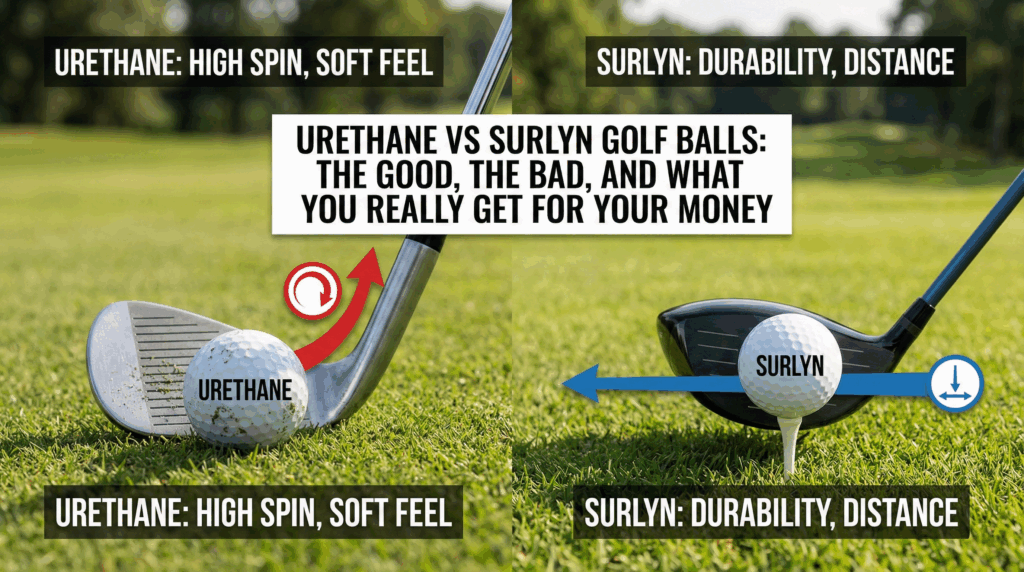
Golf balls are typically covered in either urethane or Surlyn (or a similar ionomer), and while both can perform well on the course, they are engineered for different players and different expectations. Understanding what each cover offers and what it doesn’t can save you money, improve your game, and make your rounds far more enjoyable.
The Biggest Difference: Cover Material
At its core, the difference between urethane and Surlyn comes down to softness, elasticity, and spin potential.
Urethane is soft and highly elastic, especially noticeable on slower-speed shots like chips, pitches, and putts. This softness allows the ball to respond more to your clubface, producing higher spin rates, better feel, and more control around the greens.
Surlyn, on the other hand, is firmer and more durable. It doesn’t grab the grooves of your wedges as much, resulting in lower spin, straighter flight, and enhanced resistance to scuffs and scratches. This makes Surlyn balls ideal for golfers who prioritize consistency, durability, and cost-effectiveness over maximum performance.
How Cover Type Affects Play
Around the Greens: Control vs. Durability
If your short game is a key part of your strategy, urethane balls can be transformative. The soft cover allows your wedge grooves to “grab” the ball, creating more spin and stopping power on the greens. A well-struck pitch or chip can check, hop once, and settle quickly rather than rolling out several feet past your target.
Urethane also delivers a softer feel off the clubface, often described as quieter, more muted, or more responsive. This enhanced feedback can improve distance control on delicate shots, giving skilled players the ability to finesse around hazards with precision.
Surlyn balls, while less responsive, provide a straighter, more predictable roll. They are excellent for golfers who struggle with hooks, slices, or inconsistent ball contact. On approach shots, Surlyn balls tend to roll out more, which can be an advantage for players who want more predictable landing patterns without relying on spin control.
Full-Swing Performance: Spin and Distance
With irons and drivers, the differences between urethane and Surlyn are still present, though less dramatic.
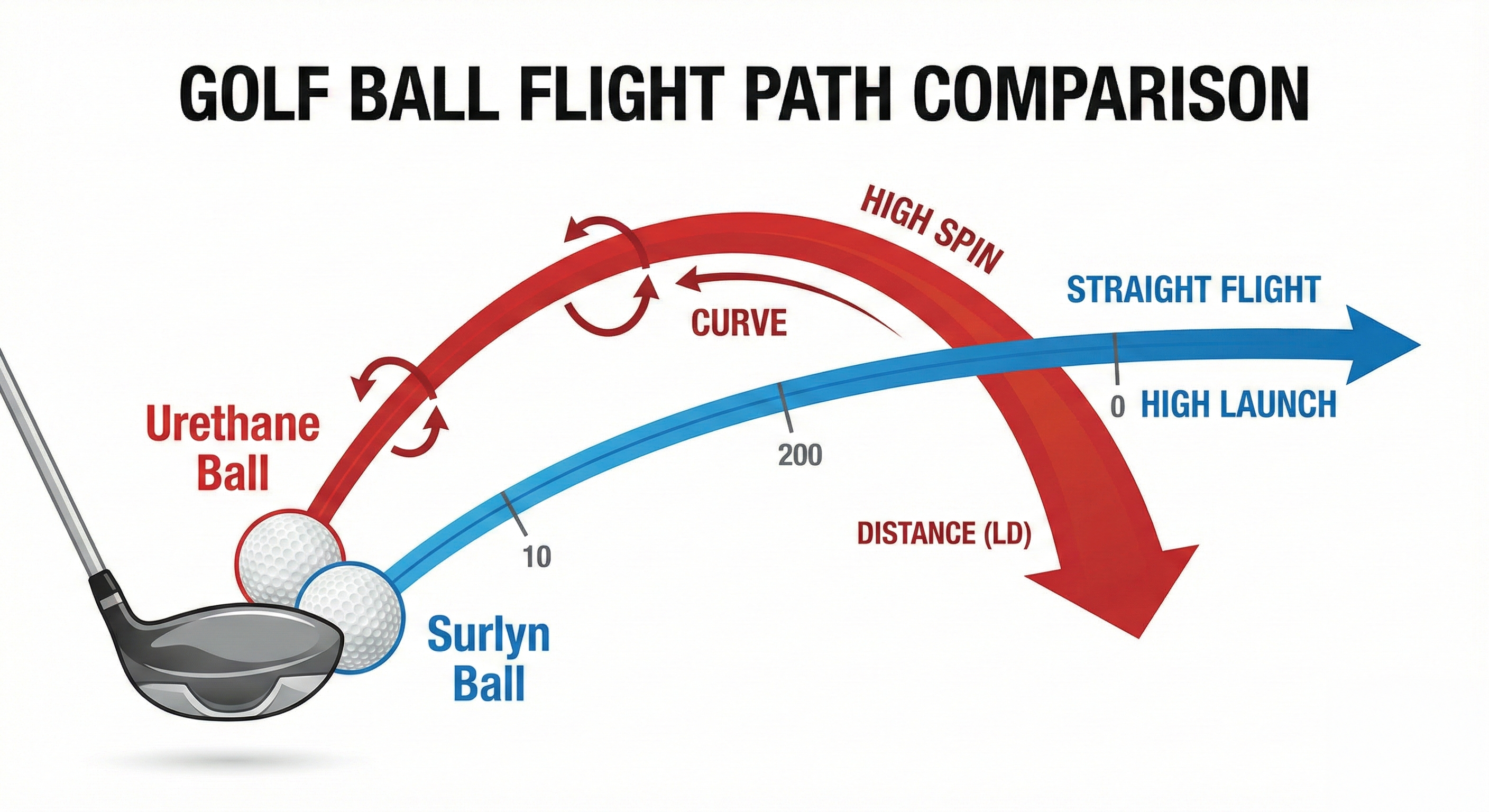
- Urethane balls generally spin more, which allows skilled players to shape shots and hold greens with long irons. This extra spin, however, can be a double-edged sword for higher-handicap golfers, leading to ballooning, hooks, or slices. In some cases, too much spin can even reduce overall distance.
- Surlyn balls launch higher and straighter, with reduced side spin. They are more forgiving on mishits, helping casual golfers keep the ball in play and maximize distance. For players battling erratic ball flights, this predictability can be a huge confidence boost.
Durability: How Long Will Your Ball Last?
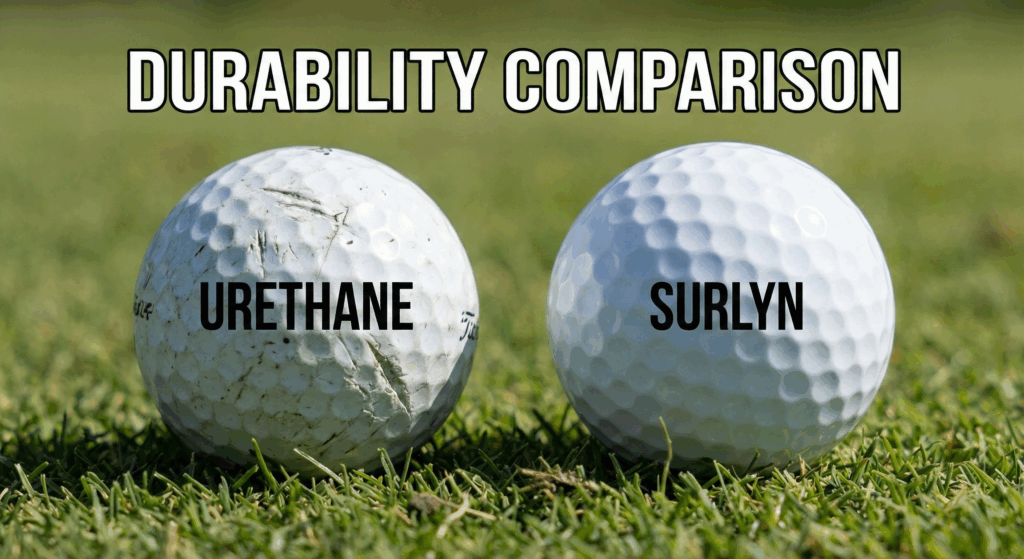
Softness comes at a cost. Urethane balls are more prone to scuffs, cuts, and marks from wedges, bunker shots, and rough play. While this typically doesn’t ruin performance immediately, it does mean you might go through balls faster.
Surlyn balls are extremely durable, resisting cuts, scuffs, and general wear. Many casual golfers can play the same Surlyn ball for multiple rounds without noticeable performance loss, making it a more cost-effective option in the long run.
Price: The Financial Factor
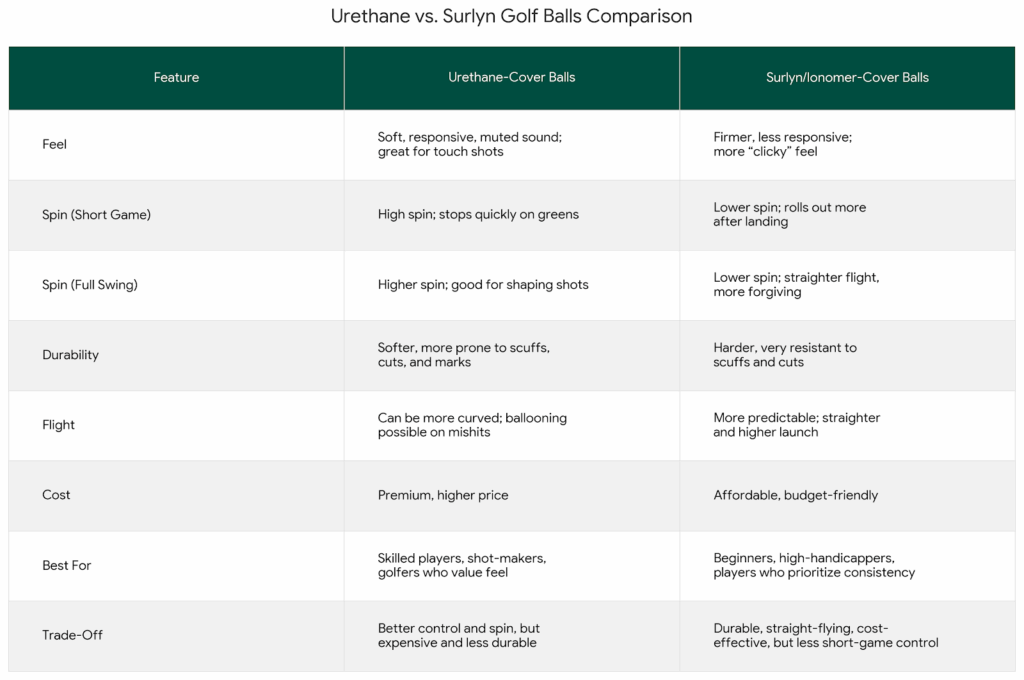
There’s no escaping it: urethane balls are more expensive. The material costs more, the manufacturing process is more complex, and the premium branding often adds to the final price tag. If you lose a few balls each round, the cost can add up quickly, and for some golfers, the performance gains may not justify the investment.
Surlyn balls are significantly cheaper, making them ideal for golfers who:
- Frequently lose balls
- Want multiple practice rounds without breaking the bank
- Prefer consistency over premium short-game performance
Skill Level: Who Benefits Most
The advantages of urethane balls shine brightest for golfers who:
- Have consistent contact
- Can handle higher spin without ballooning
- Value feel, control, and shot-shaping ability
For golfers still working on swing mechanics, or those who tend to mis-hit more often, the extra spin from urethane can actually hurt performance, creating unpredictable ball flights and frustrating short-game results. Surlyn balls, with their forgiving nature and straighter flight, often help these players shoot lower scores and build confidence.
Making the Choice: What Matters Most
In the end, choosing between urethane and Surlyn isn’t about what the pros play it’s about how you play and what you value in a golf ball.
- Choose urethane if you want:
- Maximum control around the greens
- Soft feel and responsive feedback
- Ability to stop the ball quickly on the putting surface
- Extra spin to work shots and shape the ball
- Choose Surlyn if you want:
- Straight, predictable ball flight
- Durable, long-lasting performance
- Lower cost and less worry about lost balls
- Consistency over maximum spin
Both types of balls can help you play better golf but the “right” ball is the one that suits your swing, your short game, and your approach to risk. Spend a little time experimenting, and you might be surprised at how much a simple change in cover material can improve your confidence and your score.
If you would like to stay up to date, subscribe to Golf In The City Of Sacramento.

Comments are closed.