
A Haggin Oaks Golf Super Shop Perspective
Walk onto any putting green today and you’ll see it—lines, triple tracks, arrows, dots, Sharpie masterpieces… and plenty of golf balls with nothing at all. So what’s the right answer?
Should you use an alignment aid on your golf ball?
Like most things in golf, the honest answer is: it depends. But the science—and the real-world testing—give us some fascinating clues.
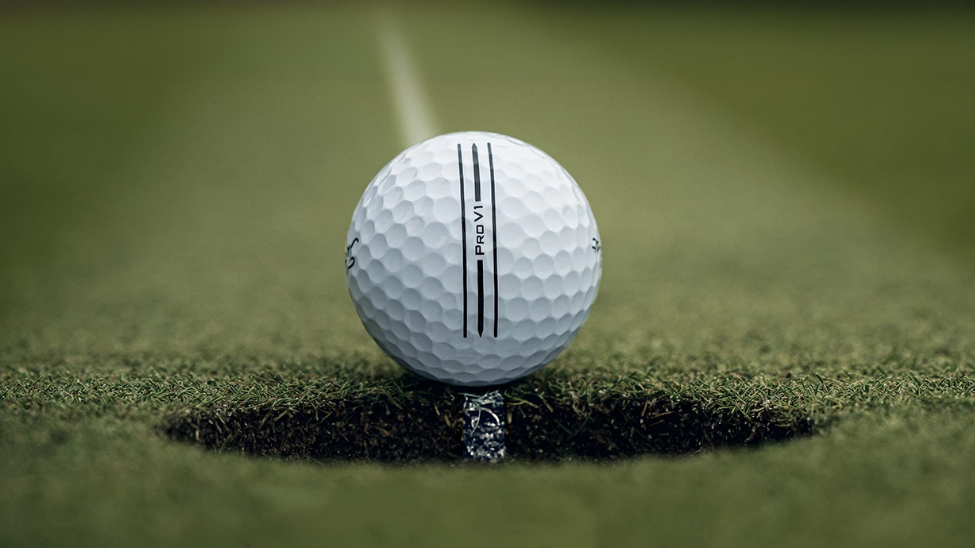
The Case For Using a Line
Let’s start with what the research says.
A study published in the Golf Science Journal found that golfers using an alignment mark improved their putting performance, particularly in terms of making more putts.
Why? Pretty simple:
- It gives you a clear visual reference
- It helps you start the ball on your intended line
- It can improve your confidence over the putt
That confidence piece is real. Research and coaching insights show that when golfers feel properly aligned, performance improves—often tied to better focus and a more stable pre-putt routine.
Then there’s the data from Titleist. Their testing found alignment markings can improve aim accuracy by up to 35%, reducing variability in how golfers line up putts.
And here’s a telling stat: over 65% of tour players using Titleist golf balls use some form of alignment marking.
That’s not coincidence—that’s adoption at the highest level.
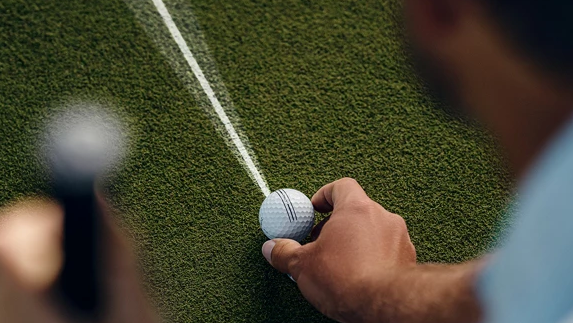
The Case Against the Line
Now let’s flip the coin.
Not all studies—and certainly not all golfers—agree.
Independent testing has shown that using a line doesn’t always improve results, and in some cases can actually hurt performance. One study found no statistical advantage overall, and even suggested performance declined on longer putts when players focused too much on the line instead of distance control.
And that tracks with what many golfers feel:
- The line can become a distraction
- It can slow down your routine
- It can shift focus away from speed and feel
Even Titleist acknowledges that some players simply don’t like it—they find it hard to align properly or visually overwhelming.
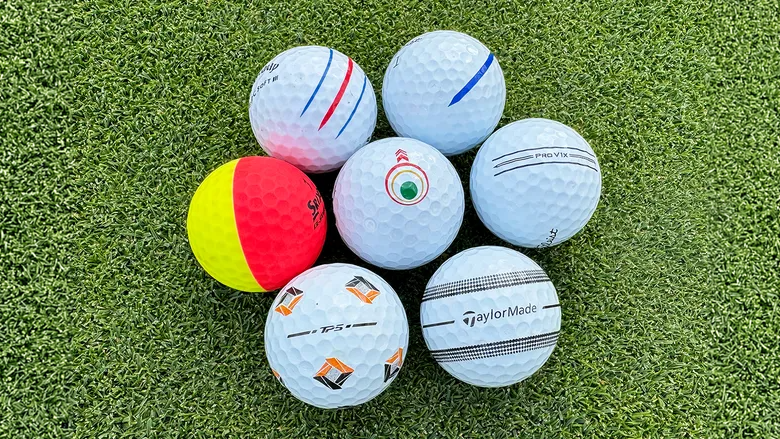
The “No Line vs. Line vs. Stripe” Reality
A practical test from Golf Monthly compared three approaches:
- No line
- Single line
- Full stripe design
The result?
- Single line performed best
- No line was second
- Stripe (the boldest visual) performed worst
Why? Too much visual information can overload your brain. The stripe looked great—but required more time and attention to align, which subtly affected the stroke.
That’s a big takeaway: More alignment help isn’t always better alignment.

What This Means for Your Game
Here’s the Haggin Oaks takeaway—and it’s one we see play out every day in our Player Performance Studio:
Alignment aids are tools, not solutions.
They help best when they match your tendencies.
Use a line if:
- You struggle with aim
- You tend to miss left/right more than long/short
- You like a structured, repeatable routine
Skip the line if:
- You’re more of a feel putter
- You get overly mechanical or “tight” with too many visuals
- Your misses are primarily distance-related
And consider a middle ground:
- A short line instead of a full stripe
- A dot or arrow instead of a long alignment mark
The Real Secret (That Nobody Wants to Admit)
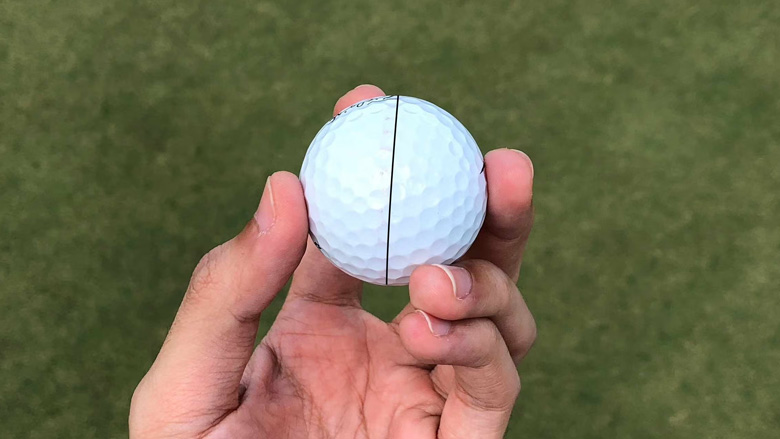
Here’s the truth the data quietly reveals:
Alignment matters… but it’s only part of the equation.
Speed control, green reading, and confidence still rule the day.
You can be perfectly aligned and still miss the putt by three feet if the pace is off.

Final Thought from Haggin Oaks
If you’re standing over a putt thinking about whether your line is perfectly aimed… you’re already in trouble.
The best players in the world don’t just aim well—they commit.
So experiment. Try a line. Try no line. Try something in between.

Comments are closed.